
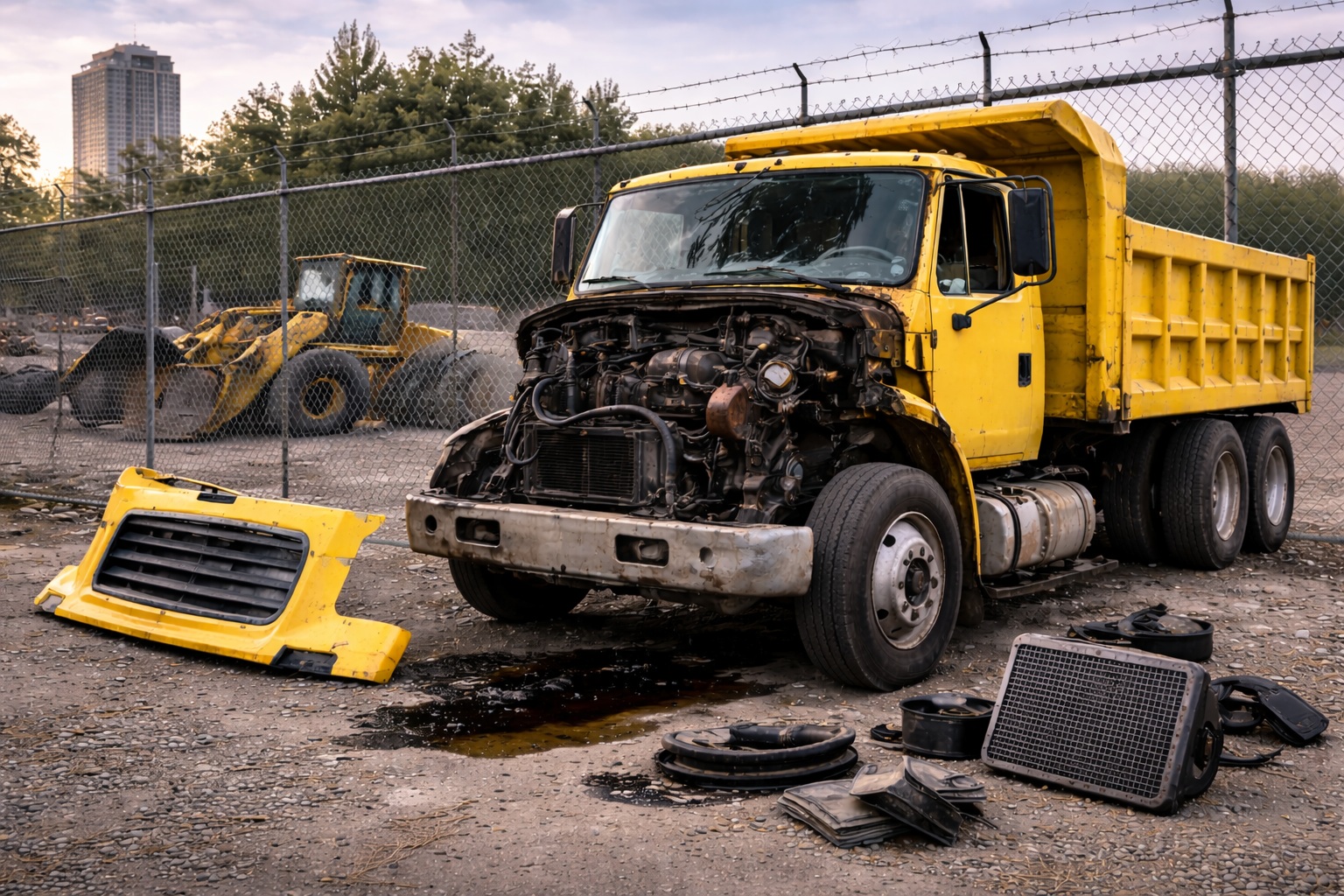
Your industrial, construction, or farm equipment is damaged. Now what? This post dives into the hidden costs beyond just the repair quote – think lost productivity, storage fees, safety risks, and declining asset value. Discover why selling your damaged machinery now, rather than letting it sit, can save you a bundle in the long run.
When industrial, construction, or farm equipment is damaged, the first question most owners ask is: “How much will it cost to fix?”
But the repair quote is often only the beginning.
Equipment damage can create several hidden expenses that continue to grow the longer the machine sits unused. From lost productivity to declining resale value, holding onto damaged equipment may end up costing far more than expected.
Understanding these hidden costs can help businesses make smarter decisions about whether to repair, store, or sell damaged machinery.
When a machine is out of service, the work it normally performs doesn’t disappear. Companies may have to:
All of these factors can affect timelines and revenue.
Damaged equipment often sits in yards, warehouses, or job sites while owners decide what to do next. However, that equipment still takes up valuable space that could be used for operational assets, materials, or new machinery.
Over time, storing damaged equipment becomes a hidden carrying cost for many businesses.
Damaged machinery left on-site can also create potential safety concerns. Sharp components, structural damage, or leaking fluids may pose risks for workers or visitors if equipment isn’t properly secured.
Managing those risks may require additional time, monitoring, or insurance considerations.
Perhaps the biggest hidden cost of equipment damage is depreciation.
The longer damaged machinery sits idle, the more its resale value can decline due to:
Waiting too long can turn a valuable asset into scrap.
In many cases, selling damaged machinery sooner rather than later can help businesses:
Instead of allowing equipment damage to create ongoing expenses, selling can convert that idle asset into working capital.
Many equipment owners choose to sell damaged machinery directly rather than letting it sit unused.
The process is simple:
Direct buyers (like us) often purchase damaged industrial equipment, construction machinery, trucks, and farm equipment nationwide, making it easier to move equipment quickly.
If damaged machinery is sitting unused on your property, selling it sooner may help you recover value and avoid ongoing expenses.
Submitting your equipment details and receiving an offer can be the first step toward turning a non-performing asset back into usable capital.
If repair costs exceed the equipment’s value, many businesses consider selling the damaged machinery to recover some of the asset’s value.
Yes. Damaged equipment can continue to depreciate due to weather exposure, corrosion, and declining market demand.
This depends on the repair cost, downtime, and resale value. In many situations, selling damaged equipment may be the more cost-effective option.
Some buyers specialize in purchasing damaged heavy machinery, including construction equipment, industrial equipment, trucks, and farm equipment.
Input your search keywords and press Enter.